

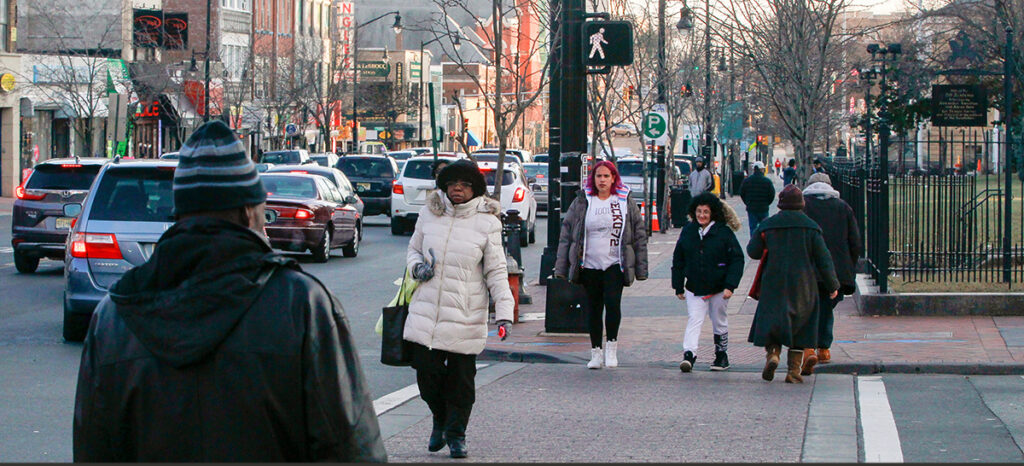
Yes, October is National Pedestrian Safety Month, but it’s also so much more.
Several other events dovetail into the theme of pedestrian safety this month:
Week Without Driving, October 1-8
A third of people living in the United States are nondrivers, according to the organizers behind Week Without Driving, whether that’s because of age, disability, or cost of car ownership.
Instead of driving, try another way to get where you need to go for all or some of your trips. Walk, roll, take the bus or train, ride a bike or a scooter. It doesn’t have to be far either. Most trips in the U.S. are less than 3 miles; that’s a bit long on foot but certainly manageable by bike. Given the rising cost of fuel, it’s not a bad idea to avoid the car when opportunities arise. Give it a shot!
Walk & Roll to School Day, October 7
For Walk & Roll to School Day, there are 2,330 events registered across the U.S., including more than 100 in New Jersey. Events on this day are a great way to promote a broader message of safety and support for safe, active travel in general, and they can be inclusive for children of all abilities while learning safe and healthy habits. These events are also a good reminder that to support walking, people need places separated from motorists; Low motorist travel speeds and volumes, and the shortest possible crossing distances. Here are some sobering numbers: Only 11 percent of students walked or biked to school in 2017, compared with 48 percent in 1969.
Teen Driver Safety Week, October 18-24
It’s an opportunity to talk to your teen about driving and the huge responsibilities that it brings. Whether it’s speeding, seat belts, distracted driving (and not just phones but passengers), and drunk driving and drugs, even drowsy driving, there’s any number of topics that can open the door to a dialogue with your teen. In 2024, there were 2,320 people killed in crashes involving a teen driver (15-18 years old).
National School Bus Safety Week, October 19-23
Is it really necessary to have a National School Bus Safety Week? Well, it has been a while since most drivers passed their written driving test, so it never hurts to have reminders about what they should and should not do behind the wheel. It may seem obvious to some but judging by how some motorists behave around school buses, remember: A school bus with its stop-arm out and flashing lights means stop — kids are crossing. So no matter where you’re headed, the rule is the same: when the stop-arm is out, you stop.
The National Highway Traffic Safety Administration (NHTSA) has some sobering statistics that will help explain why a Pedestrian Safety Month might be necessary. More than 7,000 pedestrians were killed in traffic crashes in 2024. That’s a step in the right direction – down about 4 percent – but that still means that, on average, a pedestrian died every 74 minutes and one was injured every seven minutes in traffic crashes that year. Pedestrian fatalities accounted for almost 1 in 5 (18 percent) traffic fatalities. One of the reasons that October is Pedestrian Safety Month is Halloween, which brings out lots more of the littlest pedestrians than usual. Couple that with earlier sunsets — 74 percent of pedestrian fatalities in 2024 occurred in the dark — and you’ll understand why it’s important to be even more careful that day. Plus, Daylight Saving Time ends the next day (November 1) at 2 a.m., when we move clocks back one hour.
One way to look at it is that at some point, everyone is a pedestrian. Maybe you walk to meet your child at school, drop into the local deli for a snack, or walk to the bus stop. Think about how you’d like motorists to react behind the wheel when you’re on foot and aim to do the same when you’re a driving. NHTSA offers a few tips:
- Most importantly, follow the speed limit, especially around schools and where children might be present; speeding cuts your reaction time
- Never pass vehicles stopped at a crosswalk, there may be people crossing where drivers can’t see
- Minimize blind spots
- Use extra caution when driving in difficult to see conditions
- Always stop for pedestrians
- Drive sober
For more information about pedestrian safety, visit NHTSA.gov/Pedestrian